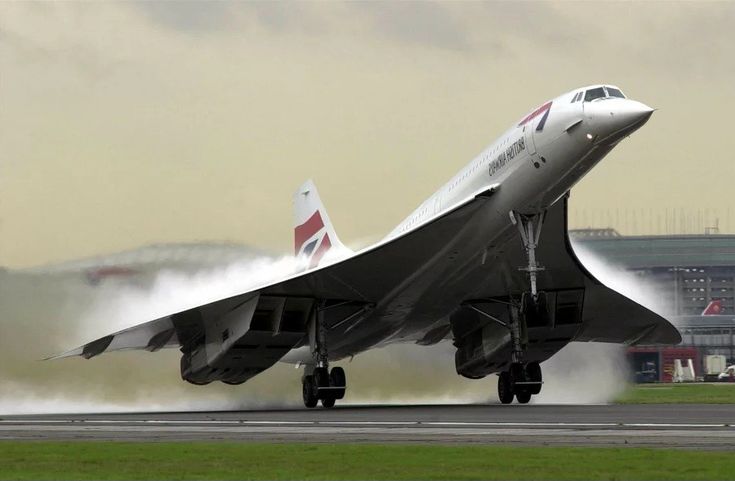
 1976
1976
Concorde
The Concorde was a groundbreaking, Anglo-French supersonic airliner that defined luxury and speed for a generation, famous for being one of only two supersonic passenger transports ever to enter commercial service. Instantly recognizable by its sleek, tailless delta-wing design and its distinctive droop nose that improved visibility during slower phases of flight, Concorde routinely cruised at altitudes up to 60,000 feet and speeds greater than Mach 2.04 (over 1,350 mph). This phenomenal speed cut the transatlantic journey from London/Paris to New York to roughly three and a half hours—fast enough that, due to time zone changes, passengers could theoretically arrive before they had left local time. Though technologically brilliant, with a capacity of about 100 passengers, the aircraft’s high operating costs, limited routes due to the sonic boom restriction, and the 2000 Paris crash ultimately led to its retirement in 2003.
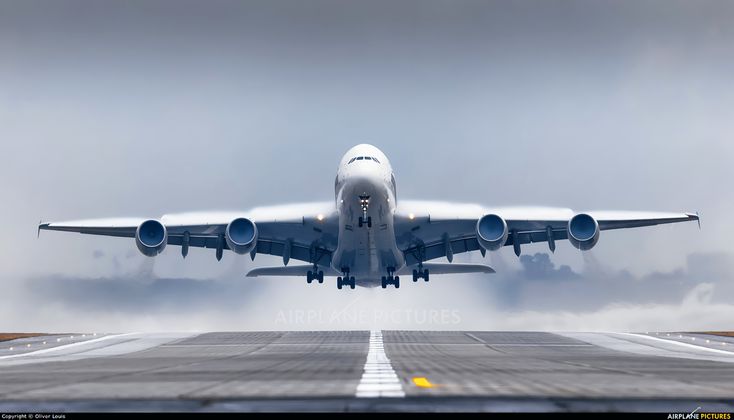 2007
2007
AirBus A380
The Airbus A380 is the world's largest passenger airliner, recognizable by its unique full-length double-deck configuration which allows for a typical seating capacity of over 500 passengers, and a maximum certified capacity of up to 853. Developed to challenge the dominance of the Boeing 747 in the long-haul market, this quadjet is known for its spacious and exceptionally quiet cabin, offering passengers an enhanced level of comfort, and allowing airlines to feature luxurious amenities like onboard lounges, bars, and even First Class shower suites. Although production ceased in 2021, the superjumbo remains in service with several major international airlines, primarily operating on high-density, long-haul routes connecting major global hubs.
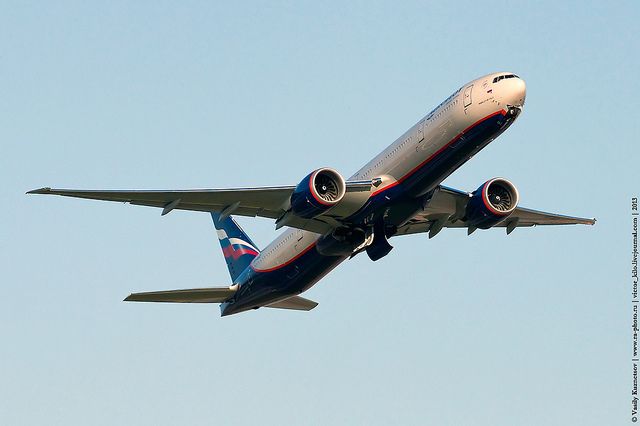 2004
2004
Boeing 777-300ER
The Boeing 777-300ER (Extended Range) is the world's most successful and common variant of the wide-body Triple Seven family, renowned for combining the massive capacity of a stretched fuselage with impressive intercontinental range, making it a true flagship for long-haul routes. Launched in 2004, this twin-engine giant is instantly recognizable by its signature raked wingtips and the powerful General Electric GE90-115B engines—the most powerful commercial jet engines ever built—which grant it a phenomenal balance of efficiency, reliability, and speed. Primarily used to connect major global hubs like New York to Hong Kong, it offers a spacious, wide-body cabin often configured by airlines to include premium seating, solidifying its reputation as a consistent passenger favorite and a highly profitable workhorse of modern long-distance travel.
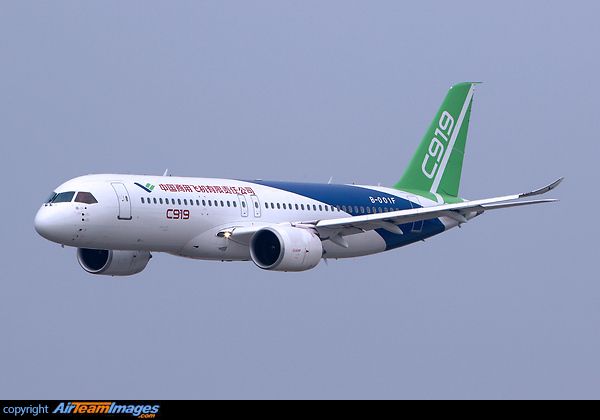 2017
2017
COMAC C919-100
The COMAC C919-100 is a modern narrow-body, twin-engine jet airliner developed by the Commercial Aircraft Corporation of China (COMAC) to compete with the Airbus A320neo and Boeing 737 MAX. It typically carries 158–174 passengers and offers a range of up to 5,555 kilometers, powered by CFM LEAP-1C engines that deliver high fuel efficiency and lower emissions. Featuring advanced avionics, fly-by-wire technology, and an aerodynamically efficient design, the C919 represents China's ambition to establish itself as a major player in the global commercial aviation market. It made its first flight in 2017 and entered commercial service in 2023 with China Eastern Airlines.
 1998
1998
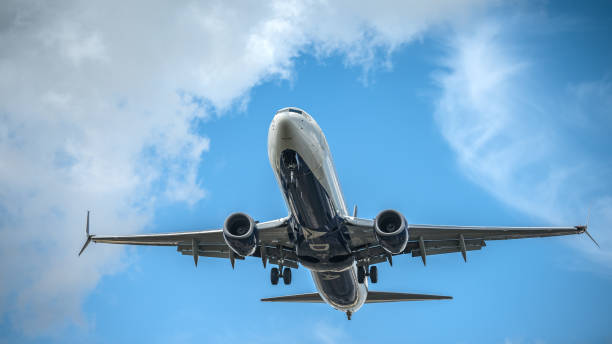
Boeing 737-800
The Boeing 737-800 is the workhorse of the 737 Next Generation (NG) family and one of the most-produced commercial jetliners in history. This twin-engine narrow-body typically carries 160–189 passengers and offers a range of about 3,000–4,000 nautical miles (5,560–7,410 km), making it ideal for short- and medium-haul routes. Powered by CFM56-7B engines, it cruises at around 511 knots (946 km/h) with a service ceiling of 41,000 ft. Airlines worldwide use the 737-800 for domestic and regional operations due to its efficiency, reliability, and common type rating with other 737 NG variants.
 2016
2016
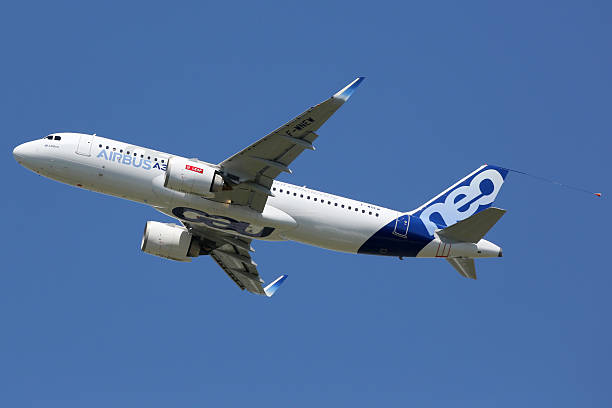
Airbus A320neo
The Airbus A320neo (New Engine Option) is the upgraded narrow-body successor to the A320ceo, entering service in January 2016 with Lufthansa. It offers 15–20% lower fuel burn and reduced emissions thanks to two engine choices—the CFM LEAP-1A or Pratt & Whitney PW1100G geared turbofan—plus standard wingtip "sharklets." Typical capacity is 150–194 passengers, with a range of about 3,400 nautical miles (6,300 km) and a cruise speed of up to Mach 0.82. The A320neo family (A319neo, A320neo, A321neo) competes directly with the Boeing 737 MAX and is a mainstay of low-cost and legacy carriers on short- and medium-haul routes worldwide.